By Charles West December 28, 2025
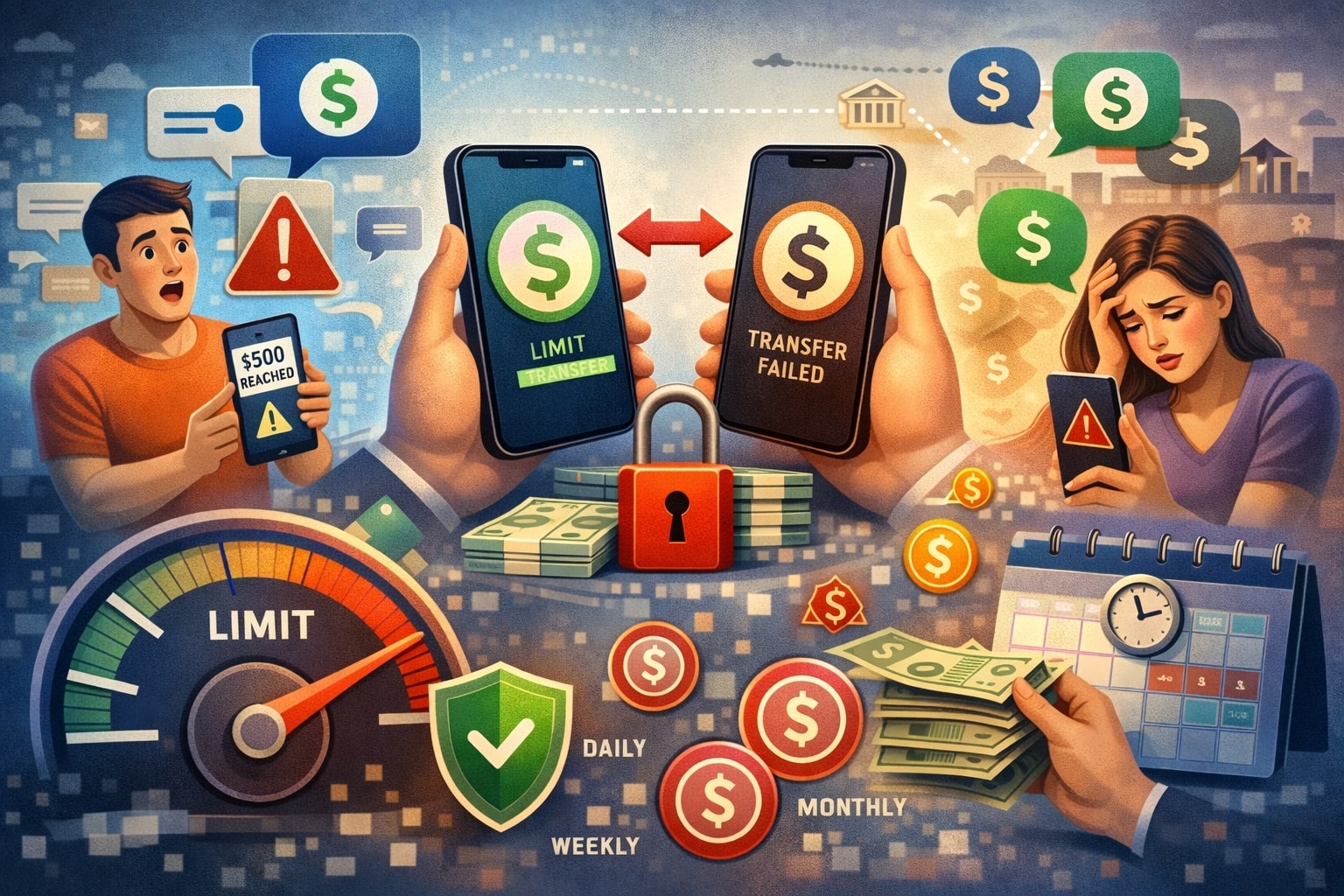
Peer-to-peer (P2P) payments feel instant and effortless—tap, send, done. But behind that simplicity is a dense set of P2P payment limits and restrictions that can affect whether a transfer goes through, how much you can send, how quickly money becomes available, and what happens if something goes wrong.
These P2P payment limits and restrictions aren’t random. They’re shaped by fraud prevention, identity verification rules, bank risk controls, compliance obligations, and the business model of each app.
If you’ve ever seen a payment declined, a transfer “pending,” a sudden request to verify your identity, or a temporary account hold, you’ve run into P2P payment limits and restrictions in real life. The confusing part is that limits aren’t one-size-fits-all.
They vary by app, by funding source (bank transfer, debit card, balance), by transaction type (sending, receiving, cashing out), and by your account status (new, unverified, verified).
Even when an app advertises “high limits,” P2P payment limits and restrictions can still tighten in certain situations—unusual activity, new devices, high-risk recipients, or chargeback-like behavior.
This guide breaks down P2P payment limits and restrictions in plain language, with updated figures where providers publish them, plus practical strategies to avoid declines, reduce holds, and plan payments like rent, contractors, tuition, and large reimbursements.
You’ll also get a forward-looking view of where P2P payment limits and restrictions are heading as fraud and regulation evolve.
What P2P payment limits and restrictions really mean (and why they exist)

When people hear “limits,” they usually think “maximum dollars I can send.” In practice, P2P payment limits and restrictions include several layers:
Transaction limits are caps per transfer (one payment), per day, per week, or per rolling period. Some apps use “rolling limits,” meaning your allowance refreshes gradually rather than resetting on a fixed calendar week. Venmo, for example, describes weekly rolling limits and shows how unverified vs verified users can have very different caps.
Account restrictions are rule-based controls that can pause sending, receiving, or cashing out. These can happen if a risk system flags suspicious patterns, if identity verification is incomplete, or if your account is new and still building trust.
Many providers reserve the right to delay, block, or lower limits for security reasons—Apple Cash support language explicitly notes that limits can be lowered or transactions canceled/delayed/blocked for security and terms reasons.
Funding-source restrictions are limits tied to how you pay. A debit-card-funded transfer might behave differently than an ACH bank transfer or an in-app balance transfer. Even if the app has a high send limit, your bank may impose its own daily cap, or your card issuer may decline a “quasi-cash” style transaction.
Recipient and network restrictions apply when the transfer rails differ. Zelle-style bank-to-bank transfers often depend on bank-defined risk policies and user tenure; many institutions set their own caps.
Public explainers consistently emphasize that Zelle limits vary by bank, which is why the same person can send $500/day at one bank and several thousand at another.
So, P2P payment limits and restrictions exist for four big reasons:
- Fraud prevention (stopping scams, account takeovers, and stolen funding sources).
- Loss control (limiting how much an app/bank can lose in a short window).
- Compliance (identity checks and monitoring obligations).
- Operational risk (new devices, unusual behavior, high dispute signals).
The takeaway: when planning high-value or time-sensitive payments, you should assume P2P payment limits and restrictions may kick in unless you prepare.
The most common types of P2P payment limits and restrictions you’ll run into
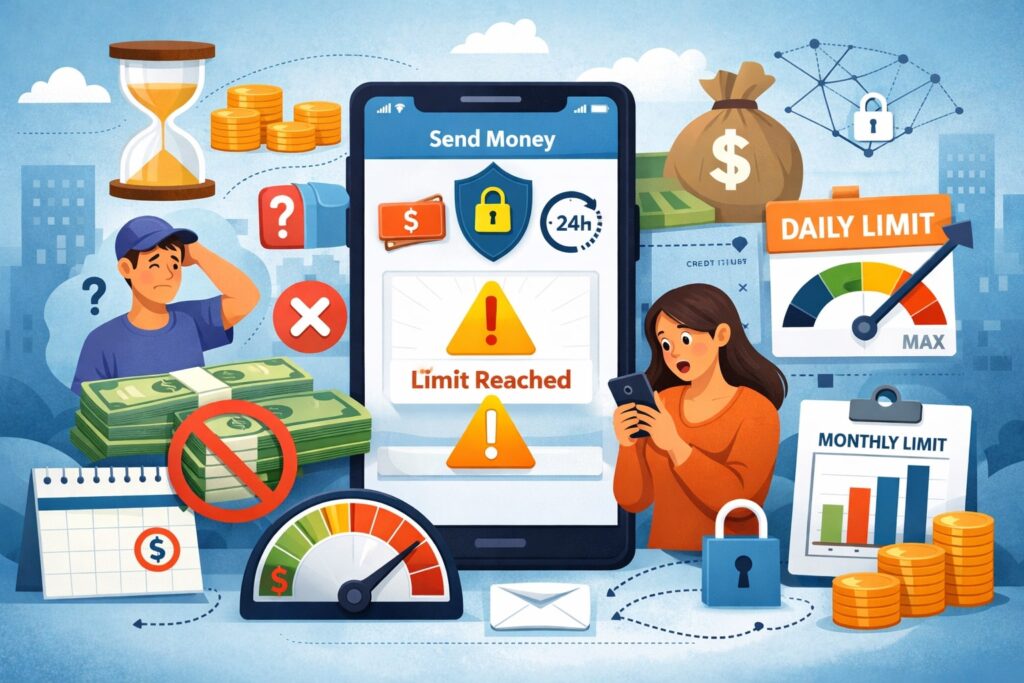
Most people encounter the same patterns across apps, even when the dollar amounts differ. Understanding these categories makes it easier to diagnose “why was my payment declined?”
Rolling weekly/monthly caps and “soft” declines
Some services use rolling periods (like 7 days or 30 days). Cash App, for instance, states that unverified and sponsored accounts can send/receive up to a stated amount on a rolling 30-day period, with additional total account caps; identity verification can raise those limits.
In real life, this creates a common situation: you might “have money” but still be blocked because your rolling limit hasn’t replenished.
A related behavior is the soft decline: the app doesn’t clearly say “limit exceeded,” but the payment fails or is reversed. That can happen when risk signals are borderline—new recipient, unusual dollar amount, or multiple attempts.
Identity verification thresholds (KYC)
A major driver of P2P payment limits and restrictions is whether the platform has verified your identity. Venmo publishes a clear example: without identity verification, weekly spending is limited (including P2P payments and merchant payments), and verifying identity can raise the weekly amount substantially.
Cash App similarly states that higher limits are available after verifying identity. PayPal notes that verified accounts may have no total sending limit, but per-transaction caps can still apply depending on currency/controls.
This is why people suddenly hit a wall after a few successful transfers: once you cross certain usage patterns, the system nudges you into verification. That’s not punishment—it’s a risk gate.
“Instant” cash-out vs standard transfer restrictions
Even if sending works, cashing out can be restricted. Many apps have separate limits for:
- Standard transfer (often ACH, slower)
- Instant transfer (debit-rail push, faster, sometimes fee-based)
Those have different caps, and the instant option can be tighter because it’s more fraud-sensitive.
Bank-defined restrictions for bank-integrated services
For bank-integrated P2P, P2P payment limits and restrictions often live at the bank level. Zelle is commonly offered inside bank apps, and independent sources highlight that daily and monthly caps vary widely by institution. That’s why two people using “the same” P2P method can have very different experiences.
Risk controls: new device, new recipient, unusual behavior
Even verified users can hit restrictions if:
- logging in from a new phone
- changing email/phone
- adding a new debit card
- sending to many new recipients quickly
- repeating failed attempts
In these cases, P2P payment limits and restrictions behave more like adaptive security than fixed numeric caps.
Updated examples of major app limits and restrictions (and what they imply)
Limits change, and providers may personalize them, so the best practice is always: check your in-app “Limits” screen and help center. Still, some providers publish baseline numbers that are useful for planning.
Venmo: unverified vs verified weekly spending (rolling limits)
Venmo’s help center explains that if you haven’t completed identity verification, you have a weekly spending limit (including person-to-person and certain other payments). After identity verification, the weekly amount can increase significantly, and Venmo emphasizes the “rolling weekly limits” concept.
What this means for planning
If you use Venmo for rent, deposits, or paying contractors, you should complete verification before you need the higher amount. Otherwise, you’ll get blocked right when timing matters, and P2P payment limits and restrictions become a real-life emergency.
Cash App: rolling 30-day limits and account caps
Cash App’s support page states your account has limits for money moving in/out; unverified and sponsored accounts can send/receive up to a stated amount on a rolling 30-day period, plus a total account limit, and you can get higher limits by verifying identity.
What this means for planning
Cash App’s version of P2P payment limits and restrictions can feel “sticky” because a 30-day rolling window replenishes slowly. If you send a large amount today, you may have to wait weeks for your available limit to fully recover.
PayPal: per-transaction caps even when “no total sending limit”
PayPal’s help center explains that verified accounts may have no sending limit on the total amount you can send, but you can still be limited per transaction (e.g., up to $60,000 in one transaction with possible limitations such as $10,000 depending on circumstances/currency).
What this means for planning
PayPal’s P2P payment limits and restrictions are a reminder that “no total limit” does not equal “no controls.” If you try a very large single transfer, you may need to split it or use a different rail.
Apple Cash: published transfer limits, with security override language
Apple’s support page outlines Apple Cash transfer limits and explicitly notes that the bank behind the service may lower limits, impose additional limits, or delay/block/cancel transactions for security/terms reasons.
What this means for planning
Even when you follow the rules, risk systems can still intervene. That’s why you should treat P2P payment limits and restrictions as both numeric caps and dynamic controls.
Zelle: limits are often set by the bank (and can vary widely)
Zelle is offered across thousands of financial institutions, and limit guides emphasize that daily/monthly send caps vary by bank or credit union. Zelle also publishes consumer guidance that it’s fast and commonly used within bank accounts, reinforcing that it’s tied closely to bank rails.
What this means for planning
If you need to send a large amount using bank-integrated P2P, your strategy may be: call your bank, check your in-app Zelle limit, and plan multiple smaller transfers over multiple days if needed. This is a practical workaround for P2P payment limits and restrictions.
Platform changes that affect “what counts” as P2P
Not every wallet keeps the same P2P feature set over time. Google’s official help documentation states that, starting June 4, 2024, peer-to-peer payments in the Google Pay app were no longer available (send/request/receive).
What this means for planning
“P2P” is not always permanent inside a given app. Future product shifts can create P2P payment limits and restrictions by removing features entirely or moving them under different terms.
Why payments get declined even when you’re “under the limit”
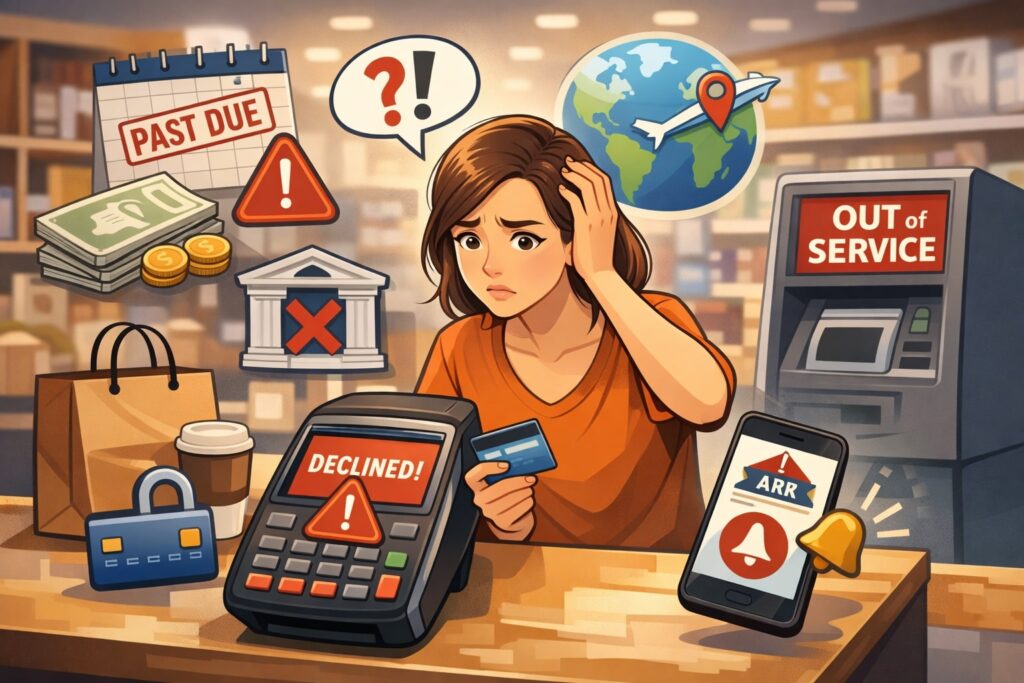
A frustrating reality: you can be under the posted cap and still fail. This is where P2P payment limits and restrictions behave like a risk engine, not a calculator.
Fraud patterns and scam prevention logic
Modern P2P scams often involve urgency (“send it now”), new contacts, odd amounts, and repeated attempts. Risk models look for these patterns. If you suddenly send a large amount to a new recipient and then try again after a failure, you’ve created a fraud-like signature. A decline might be the system protecting you—even if you’re certain the recipient is legitimate.
Recipient risk and mismatched identity signals
Some platforms watch whether the recipient is:
- new or unverified
- receiving unusually high volume
- linked to suspicious device or email patterns
Even if your account is clean, the ecosystem can trigger P2P payment limits and restrictions based on the other side.
Funding-source and bank authorization declines
Sometimes the app approves but the bank declines. Debit and credit authorizations can fail due to:
- insufficient funds (including holds)
- bank fraud controls
- merchant category restrictions
- card verification issues
In those cases, raising your in-app limit won’t help because the restriction is external.
Velocity controls: too many actions too fast
Sending multiple requests, adding cards, changing password, and sending money in the same hour can trip restrictions. Many “my account is locked” stories are actually P2P payment limits and restrictions triggered by rapid changes.
Practical tip: If a transfer fails, avoid repeated rapid retries. Wait, confirm details, and check whether the app asked for verification or additional confirmation.
Compliance and legal rules that shape P2P payment limits and restrictions
Even if you never think about regulation, it impacts your daily experience through identity checks, reporting rules, and error-resolution expectations.
Identity verification and monitoring obligations
Payment apps and banks operate under anti-money-laundering frameworks that encourage identity verification and suspicious activity monitoring. The Bank Secrecy Act (BSA) is the foundational framework that authorizes reporting and other requirements to help detect and prevent money laundering.
While most consumer P2P transfers aren’t “cash” events, the compliance mindset influences why P2P payment limits and restrictions tighten when accounts are unverified or behavior looks unusual.
Separately, bank compliance manuals and regulatory guidance also reinforce reporting rules for currency transactions over certain thresholds (for physical cash). For example, the FDIC risk management manual discusses Currency Transaction Reports (CTRs) for currency transactions over $10,000.
This matters because many people confuse “$10,000 reporting rules” with P2P transfer limits. They’re not the same thing—but the general compliance environment still encourages conservative risk controls.
Consumer protections and error resolution (Reg E context)
When something goes wrong—wrong recipient, unauthorized transfer, scam—people ask: “Do I have protections?” Electronic Fund Transfer Act/Regulation E frameworks influence error resolution for certain electronic transfers, and the CFPB maintains compliance FAQs on electronic fund transfers.
In some scenarios, responsibilities differ depending on whether the transfer is authorized or unauthorized, and whether it’s through a bank account. This complexity is one reason platforms design P2P payment limits and restrictions to prevent problems upfront, because post-incident recovery is difficult.
Tax reporting: why “friends and family” labeling matters
A huge real-world trigger for restrictions is when P2P is used for business-like payments. The IRS explains that Form 1099-K is used to report payments received from payment cards and payment apps/online marketplaces for goods or services, and that whether you receive a form depends on thresholds and conditions.
This is where user behavior matters: mixing personal reimbursements with sales or side-hustle income can create confusion and may lead to holds or additional verification.
Even when a platform allows “personal” transfers, its risk system may treat high-volume inflows as business-like, tightening P2P payment limits and restrictions until your account profile is clearer.
How to increase limits and reduce restrictions safely (without triggering more flags)
If you want fewer surprises, think of this as “making your account boring” to risk engines. The goal is to minimize P2P payment limits and restrictions by building trust signals.
Complete identity verification early
This is the most direct lever. Venmo, Cash App, and PayPal all publish that verification can unlock higher ceilings or remove certain caps. Do it before you need higher limits, not when you’re mid-transaction.
Use stable account behavior for a few weeks
Risk systems “learn” from consistency:
- keep the same device
- avoid frequent funding source changes
- keep profile info consistent
- don’t send many first-time payments in one day
This reduces dynamic P2P payment limits and restrictions that come from volatility.
Split large payments intentionally (and transparently)
If you’re paying rent or a contractor, plan:
- smaller transfers over multiple days, if your rail allows it
- one transfer from a bank account (ACH) instead of multiple debit-funded transfers
- use a method designed for higher-value transfers when needed
This is not about dodging rules—it’s about working within P2P payment limits and restrictions that are designed for consumer-scale payments.
Confirm recipient details like a checklist
Wrong-recipient transfers are a top pain point because many P2P systems have limited “purchase protection.” Zelle consumer materials explicitly warn users to send only to people and businesses they trust, and note that Zelle does not offer purchase protection. That warning exists because mistakes are hard to reverse—another reason limits exist.
Before hitting send:
- confirm the phone/email is correct
- do a $1 test payment if allowed
- confirm the recipient acknowledges receipt before you send the full amount
These habits prevent the worst outcomes associated with P2P payment limits and restrictions.
Future prediction: where P2P payment limits and restrictions are heading (2026–2028)
Expect P2P payment limits and restrictions to become more personalized, more real-time, and more tied to identity, device trust, and behavior.
More adaptive, AI-driven limits
Static weekly caps will remain, but the bigger shift is dynamic ceilings that change per user and per recipient. If you’re verified and have long-term good behavior, you may see “silent” limit expansions. If you have risky signals (new device + new recipient + large amount), you’ll see tighter restrictions, even if you never hit a published cap.
Stronger identity and “purpose of payment” signals
Tax reporting and fraud pressure push platforms to distinguish personal reimbursements from goods/services. As a result, you’ll likely see more prompts about payment purpose, more metadata, and more friction for accounts with mixed usage. This is P2P payment limits and restrictions evolving into “context-based controls.”
Increased oversight and shifting regulatory posture
Regulatory interest in digital payment applications has been active in recent years. The CFPB finalized a rule defining “larger participants” for general-use digital consumer payment applications, expanding supervision authority over major nonbank wallet/app providers.
News coverage also highlights legal and political pushback and potential policy reversals, which can affect how oversight evolves.
What’s most likely for everyday users: not a single universal cap, but more behind-the-scenes requirements that influence P2P payment limits and restrictions—verification expectations, complaint handling, and fraud controls.
More “feature churn” (P2P today, gone tomorrow)
Google Pay’s P2P shutdown in 2024 is a reminder that product strategy can remove P2P capabilities. Over the next few years, expect consolidation into fewer “wallet hubs,” and when features move, limits and restrictions often change with them.
FAQs
Q.1: Why did my payment fail if I’m below the posted limit?
Answer: Because P2P payment limits and restrictions include risk rules beyond the numeric cap—new device, new recipient, unusual amount, rapid retries, bank authorization issues, or security flags can all override the posted number.
Q.2: Do P2P apps have the same protections as card payments?
Answer: Often no. Many P2P systems warn that transfers should be sent only to trusted recipients, and some rails do not provide purchase protection the way credit cards do. Zelle materials explicitly caution users and note lack of purchase protection.
Q.3: Is there a “$10,000 rule” for P2P transfers?
Answer: People often mix concepts. Reporting rules like CTRs apply to physical currency transactions over $10,000, as described in banking compliance guidance. P2P transfer limits are separate and are set by the app/bank, though compliance thinking influences P2P payment limits and restrictions overall.
Q.4: Will I get a tax form if I receive money through a payment app?
Answer: It depends on whether payments are for goods/services and whether thresholds apply. The IRS explains Form 1099-K reporting relates to payments received through payment apps/marketplaces for goods/services and is threshold-based.
Personal reimbursements generally shouldn’t be treated the same as business payments, but mixing them can create confusion.
Q.5: How do I raise my limits quickly?
Answer: The fastest legitimate path is completing identity verification (KYC), then maintaining stable behavior. Venmo and Cash App both describe verification as the way to access higher limits.
Q.6: What’s the best method for large, time-sensitive payments?
Answer: If P2P payment limits and restrictions are likely to block you, consider splitting payments over days, using a bank transfer method designed for larger amounts, or coordinating directly with your bank if you’re using bank-integrated P2P where limits are institution-defined.
Conclusion
P2P payment limits and restrictions are not just annoying caps—they’re the safety rails that keep fast money movement from turning into fast losses. Once you see limits as a system (numeric caps + identity gates + risk controls + bank authorization + compliance signals), the confusing behavior makes more sense.
Your best outcomes come from preparation: verify early, keep your account stable, confirm recipients carefully, and plan large payments with splitting or alternative rails.
Over the next few years, P2P payment limits and restrictions will likely become more adaptive and personalized, driven by fraud pressure and evolving oversight.
That’s good news for careful users: consistent, verified behavior should unlock smoother experiences. It also means casual “send big money instantly to someone new” will keep getting harder—and that’s the point.