By Rinki Pandey December 9, 2025
Millions of consumers now use QR code payments, which were once a specialized idea. Their simplicity—scanning a code, verifying the amount, and making an instant payment—is what makes them appealing. This change offers businesses the opportunity to update their checkout process without the need for costly equipment or a difficult onboarding process.
The adoption of QR codes is now organic rather than forced, driven by the growth of smartphones, the contactless culture, and the rise of digital wallets. Payments can be processed in minutes, even by small businesses without point-of-sale systems.
These days, companies want to know if QR codes are appropriate for their audience, operations, and long-term objectives rather than if they are effective. Determining whether QR payments are the best strategic course of action requires a thorough understanding of the advantages, risks, and real-world applications.
Why QR Codes Became a Popular Payment Option

When contactless interactions became crucial during the pandemic, QR payments increased dramatically. However, because they resolved persistent issues like costly hardware, lengthy checkout lines, and friction in digital payments, their growth persisted.
Customers can use the device they already have in their hands to avoid using cards, cash, or keypads by scanning a QR code. Companies value not having to pay for card readers or terminals that are prone to upgrades and malfunctions. Global wallet adoption—Apple Pay, Google Pay, PayPal, Venmo—fueled the shift even further.
Because of their affordability, ease of use, and safety, QR codes have evolved from a short-term fix to a strategic payment channel that supports enterprise-level operations as well as small, independent vendors.
How QR Code Payments Actually Work Behind the Scenes
Even though QR payments appear simple, a complex process takes place behind the scenes. A customer can access a secure payment page or wallet interface by scanning a QR code that contains encoded data.
The payment processor confirms funds, validates identity, tokenizes sensitive information, and provides real-time confirmation to both customers and merchants. Dynamic QR codes create distinct transaction IDs that make reconciliation easier, while static QR codes allow the price to be manually entered or pre-set.
This system satisfies security and compliance requirements without requiring swiping or tapping. Instead of viewing QR payment as just another digital shortcut, business owners can trust the method by understanding this behind-the-scenes process.
QR Payments as a Low-Cost Checkout System for Merchants
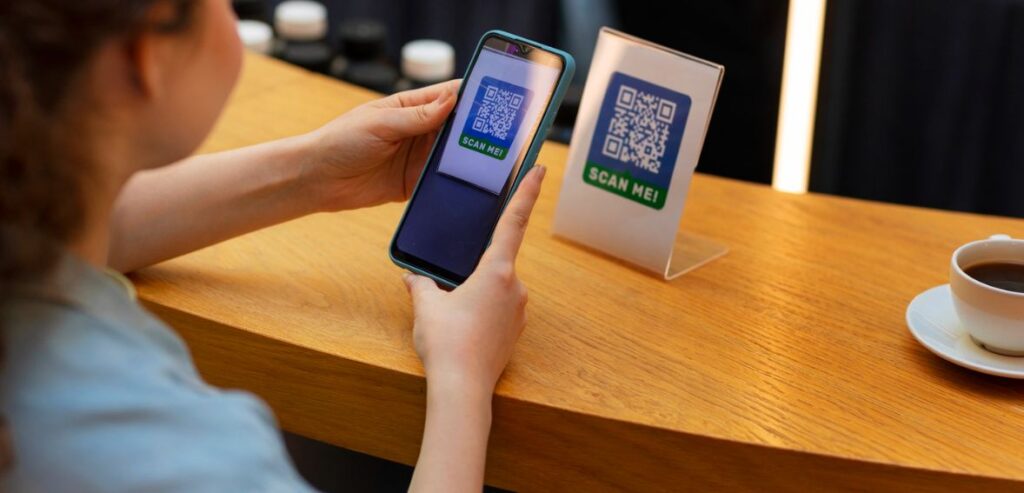
Because QR payments significantly lower operating costs, many retailers find them attractive. Traditional card terminals need to be purchased up front, have monthly fees, be maintained, and have their hardware changed regularly.
On the other hand, creating a digital display or printing a sign is all that is needed for QR codes. Although fees differ depending on the wallet or processor, wallet-to-wallet transfers or ACH-based options frequently allow for more affordable rates when using QR-based payments.
This cost-effectiveness can greatly increase margins for pop-up stores, food trucks, and small vendors. To expedite service and ease POS congestion, even larger retailers take into account QR options. One of the main motivations for merchants to adopt QR-first workflows is still the cost benefit.
Customer Convenience and the Appeal of Contactless Payments
Consumers value seamless, modern, and effortless payment experiences. By eliminating the need to dig through wallets, type card numbers, or touch public keypads, QR payments reduce friction. This convenience is important in places like cafés, salons, and medical offices where speed and cleanliness are top concerns.
Additionally, consumers who wish to avoid carrying cards or who prefer digital wallets view QR as a logical extension of their mobile lifestyle. Because they appreciate independence and self-service, younger audiences—particularly Gen Z and millennials—adopt QR techniques. Easy checkout improves customers’ perceptions of the company, which in turn affects repeat business, loyalty, and satisfaction.
Lowering Checkout Barriers Without Additional Hardware
Reducing hardware dependency is a big benefit for companies looking to expand rapidly or run in several locations. New hires can take payments using QR codes without having to understand a complicated point-of-sale system.
Cleaners, technicians, trainers, and mobile vets are examples of mobile teams that can only bring their smartphones. Because there is no reliance on hardware, there is less chance of a breakage, fewer IT tickets, and a shorter onboarding period.
Businesses have flexibility and negotiating power because they can even switch processors without switching machines. QR payments offer agility that was just not achievable with fixed terminals or legacy POS environments because they eliminate conventional barriers.
Modernizing the Customer Experience with Self-Service Options

Self-service has emerged as a key feature of modern business. Because QR payments enable users to finish transactions on their own, they naturally fit into this trend. To cut down on wait times, restaurants adopt QR ordering systems.
Retail establishments link QR codes to product information, customer reviews, and loyalty perks. Clients can pay invoices immediately without the assistance of staff, through service providers. Customers tend to spend less time waiting and more time investigating when they have more control.
This results in a more seamless interaction that is in line with how people prefer to communicate these days—on their own schedule, on their own device, free from pressure or inefficiencies.
QR Codes for Events, Markets, and Pop-Up Vendors
Pop-up markets, craft fairs, festivals, and outdoor events frequently take place in unpredictable settings without hardware support, power outlets, or reliable Wi-Fi. These problems are resolved with QR codes, which enable businesses to take payments using just a printed sign.
Even when several people are looking at once, they help sellers move consumers more quickly and reduce line congestion. Because consumers are not limited by cash on hand, digital wallets encourage impulsive purchases.
QR codes facilitate the speedy onboarding of large numbers of temporary vendors for event organizers. They provide optimum dependability and minimal setup for adaptable, high-volume situations.
Security Strengths of QR Code Payments
Although many business owners believe that card-based transactions are more secure than QR purchases, this is frequently not the case. The merchant’s gadget never handles sensitive data. Tokenization significantly lowers exposure risk by substituting random identifiers for card numbers. An extra degree of security is added by requiring biometric or passcode authentication for wallet-based QR transactions.
Because QR systems remove the majority of PCI compliance obligations, merchants who were previously concerned about data breaches related to stored customer information find them refreshing. QR payments are among the safest digital solutions for both parties due to the combination of encryption, tokenization, and secure wallet architecture.
Security Risks and Common Vulnerabilities

QR payments carry some danger even though they are secure. The greatest danger is “QR code tampering,” in which con artists swap out genuine codes for fake ones in order to reroute payments to their personal accounts.
Users may be directed to harmful websites via phishing QR codes that are posted in public spaces. Inexperienced workers may become confused by phony payment confirmations. These hazards emphasize how crucial it is to use payment providers that validate every transaction, train employees, and maintain regulated environments.
The majority of vulnerabilities are not caused by technical defects but rather by social engineering. Companies can successfully reduce risks without compromising the advantages of QR technology by educating staff and implementing platform-level controls. Many of these risks overlap with common P2P payment scams, where criminals exploit user trust and redirect payments through deceptive digital tactics.
How QR Payments Reduce Administrative Burden
The effect that QR payments have on back-office productivity is one of their hidden benefits. Reconciliation is automated using digital transactions. Managers no longer have to spend hours comparing cash totals with handwritten receipts. The payment dashboard allows for rapid handling of refunds, modifications, and reports.
Disputes over missing payments or inaccurate totals are eliminated by digital records. QR payments greatly lessen the administrative burden for teams managing high transaction volumes.
Cleaner bookkeeping, fewer mistakes, and quicker financial assessments result from this. Even before taking into consideration customer-facing enhancements, many companies find that implementing QR payments is justified by the operational savings.
QR Payments and Customer Behaviour Insights
Purchase time, item preferences, spending trends, and interaction analytics are all generated by each QR transaction. Businesses can gain a deeper understanding of consumer behaviour using this information. Restaurants find out what makes customers come back.
Retailers find out which promotions yield the highest conversion rates. Service providers are able to determine which times and dates bring in the most money. While QR-based solutions function more like mini-CRM tools, traditional card terminals only provide limited insights.
Payment dashboards that incorporate data allow organizations to improve staffing, offerings, and pricing. QR payments allow firms to see previously undetectable trends in a market where data drives competitive advantage.
Branding Opportunities Through QR Experiences
QR payments offer branding options in addition to being transactional. Businesses can use logos, messaging, and tailored offers to strengthen their brand on custom landing pages.
Coupons, feedback links, and loyalty invites are examples of digital receipts. Restaurants can use QR ordering in conjunction with chef or ingredient narratives. Customers can be encouraged to join VIP programs or follow social media pages by retailers.
The brand has direct access to the customer’s digital environment because QR interactions take place on a personal device. Compared to typical registers, this fosters a stronger bond and transforms each payment into an interaction rather than a standard checkout.
Choosing the Right QR Payment Provider
When choosing a QR payment provider, it’s important to consider integration options, reporting tools, fees, and dependability. While some QR systems function as independent wallets or third-party interfaces, others establish direct connections with current point-of-sale systems.
The top suppliers provide quick settlements, robust anti-tampering safeguards, real-time reporting, and easily reachable customer service. Additionally, especially in service-oriented industries, businesses should determine whether the supplier accepts tipping, regular billing, invoicing, and refunds.
Scalability is also important; the platform should be able to handle high transaction volumes, seasonal peaks, and several locations. Selecting the appropriate supplier guarantees that QR adoption improves rather than complicates processes.
Employee Training and Operational Best Practices

Clear staff training is necessary for QR adoption to be successful. Workers must be able to assist clients, validate payments, and resolve typical problems. Older clients or those who are not familiar with scanning technologies are less reluctant after receiving training.
Workflows like the placement of QR signs, the display of dynamic codes, and the flagging of incomplete payments should all be standardized by businesses. QR payments feel seamless rather than confusing due to operational consistency. Even if training is not as important as it is for point-of-sale systems, it is still essential to ensure that the company fully benefits from QR capabilities.
Real Use Cases: Restaurants and Hospitality
Among the first businesses to use QR payments were restaurants. By handling menus, ordering, tipping, and checkout via a customer’s phone, staff workload can be decreased and table turnover accelerated.
QR codes remove counter bottlenecks in fast-casual settings. QR codes are used by hotels for expedited checkouts, room service requests, and spa fees. To reduce wait times, cafés post QR codes on their tables.
Even food trucks use QR codes to manage large gatherings without having to install expensive terminals. QR payments enable a more modern and efficient service flow in hospitality environments where customer experience and quickness are closely related to profitability.
Real Use Cases: Retail and In-Store Shopping
QR codes are used by retailers to connect the real and virtual worlds. Customers scan and pay instantaneously via a wall-mounted QR display or a payment prompt on a portable device rather than standing in line at a register.
During peak hours, QR codes assist merchants by cutting down on queues so that employees may concentrate on customer service and sales rather than transactions. Additionally, retailers include QR codes into digital receipts, financing alternatives, and loyalty programs.
QR payments allow tiny boutiques to have a more open and engaging layout by doing away with the necessity for large, cramped registers. Both local stores and large corporations can benefit from QR adoption’s adaptability.
Real Use Cases: Service Businesses and Mobile Professionals
For mobile professionals, QR payments address a significant issue: how to rapidly collect payment without carrying equipment. After doing work, QR codes are used by consultants, tutors, fitness instructors, landscapers, cleaners, and repair professionals to offer fast payment links.
Customers pay on the spot, which lowers the number of overdue invoices. Without requiring merchant hardware, QR payments foster professionalism for independent contractors.
Convenience and adaptability are key components of the service industry, which makes QR codes a great choice for teams who are often on the go. Businesses spend more time providing value and less time chasing money when payments are seamless.
The Future of QR Payments in Business
The continued growth of digital wallets, biometric authentication, and integrated commerce platforms is all critical to the future of QR payments. More and more QR codes will connect payments to embedded financing choices, tailored suggestions, and loyalty programs.
Wearable QR tokens or dynamic smart displays could take the role of static QR signs thanks to emerging technologies. QR transactions may completely avoid card networks if more governments implement real-time payment rails, substantially cutting costs. The trend toward mobile-first contact indicates that QR payments will keep growing, not as a fad but as a fundamental component of modern business.
Conclusion: Should Your Business Switch to QR Payments
Although there is no one-size-fits-all solution, QR payments have several advantages, including reduced expenses, quicker service, deeper consumer insights, and increased operational flexibility.
They excel in settings where mobility, speed, and convenience are crucial. QR payments seem natural to tech-savvy audiences. Hybrid approaches provide the optimum balance for diverse audiences. The secret is to employ QR codes because they address actual business problems rather than just because they are trendy.
QR payments are more than just a tool when used carefully. They turn into a doorway to improved customer service, more powerful branding, and a more effective, flexible business strategy.
FAQs
Are QR code payments secure for businesses and customers?
Yes. QR payments use encryption, tokenization, and wallet authentication, making them highly secure. Most risks come from code tampering—not the technology itself.
Which types of businesses benefit most from QR code payments?
Restaurants, salons, retail shops, service providers, pop-up vendors, and mobile professionals benefit the most because QR codes speed up checkout and reduce hardware costs.
Do QR payments reduce the need for POS hardware?
Yes. Many businesses can accept payments with just a printed or digital QR code, eliminating terminals, maintenance fees, and device downtime.
What are the biggest risks of using QR payment systems?
The primary risks include fake QR code swaps, phishing QR codes, and poorly trained staff missing fraudulent redirects. These can be avoided with controlled signage and secure providers.
Can QR code payments improve customer experience?
Absolutely. They offer faster checkout, self-service options, and mobile convenience—leading to shorter lines, smoother service flow, and higher customer satisfaction.